
Not All Helmets Offer the Same Protection for E-Bike Riders
Summary
AAA research found that two-thirds (66%) of adults have seen children riding e-bikes or e-scooters without helmets. The findings come as medical experts report rising numbers of serious e-bike injuries, including head and neck trauma. AAA encourages riders to wear a properly fitted helmet and explains how to choose one that is appropriate for the speed and type of device being ridden.
Key Takeaways
- 66% of adults have seen children riding e-bikes or e-scooters without helmets.
- 59% believe not enough riders wear helmets.
- 83% support helmet requirements for e-bike and e-scooter riders.
- Head and neck injuries are among the most common injuries associated with e-bike crashes.
- AAA recommends choosing a helmet certified for the speed and capabilities of the device being used. Additional guidance is available in AAA's free E-Ride Safety Guide.
Media Resources
- Video Sound Bite: AAA Spokesman
- E-Bike and E-Scooter Safety FAQ (PDF)
- B-Roll: E-bikes & E-Scooters
- Video Sound Bite: Pediatric Surgeon
As e-bikes and e-scooters become more common among children and teens, AAA is reminding families that helmets remain one of the most effective ways to reduce the risk of serious injury.
According to a recent AAA survey of Floridians:
- 66% of adults have seen children riding e-bikes or e-scooters without a helmet
- More than half (59%) believe not enough riders wear helmets
- 83% support helmet requirements for e-bike and e-scooter riders
These findings come as health care providers across the country report a sharp rise in injuries involving young e-bike and e-scooter riders.
Why Are Doctors Concerned About E-Bike Injuries?
According to a recent medical study, injuries involving e-bikes and e-scooters among children and adolescents increased 7.5-fold between 2023 and 2026. The analysis examined more than 12,000 pediatric emergency department visits and found that more than a third of injured patients suffered head or neck injuries, while nearly 7% sustained traumatic brain injuries.
"Many parents see e-bikes and e-scooters as just another version of a bicycle, but some of these devices can reach much higher speeds,” said Mark Jenkins, spokesman for AAA - The Auto Club Group. “With higher speeds come greater risks. That's why it's so important for riders to wear a helmet that fits properly and is designed for the type of device they're riding."
The American College of Surgeons reports that head injuries are the most common injuries associated with e-bike crashes and notes that only about one-third of injured riders are reported to be wearing helmets. The organization recommends universal helmet use and advises matching helmet protection to the speed of the device.
What Type of Helmet Should You Wear on an E-Bike or E-Scooter?
Not all helmets are designed for the same type of riding. As device speeds increase, so does the need for additional impact protection. AAA recommends choosing a helmet that is certified for the speed and capabilities of the device being ridden.
Common helmet standards include:
- CPSC-certified bicycle helmets for traditional bicycles and lower-speed devices, generally up to 20 mph
- NTA 8776 helmets, which were developed for higher-speed e-bikes and e-scooters, generally up to 28 mph
- DOT-certified motorcycle helmets, designed for devices capable of speeds beyond 28 mph and offering additional protection, often including facial coverage
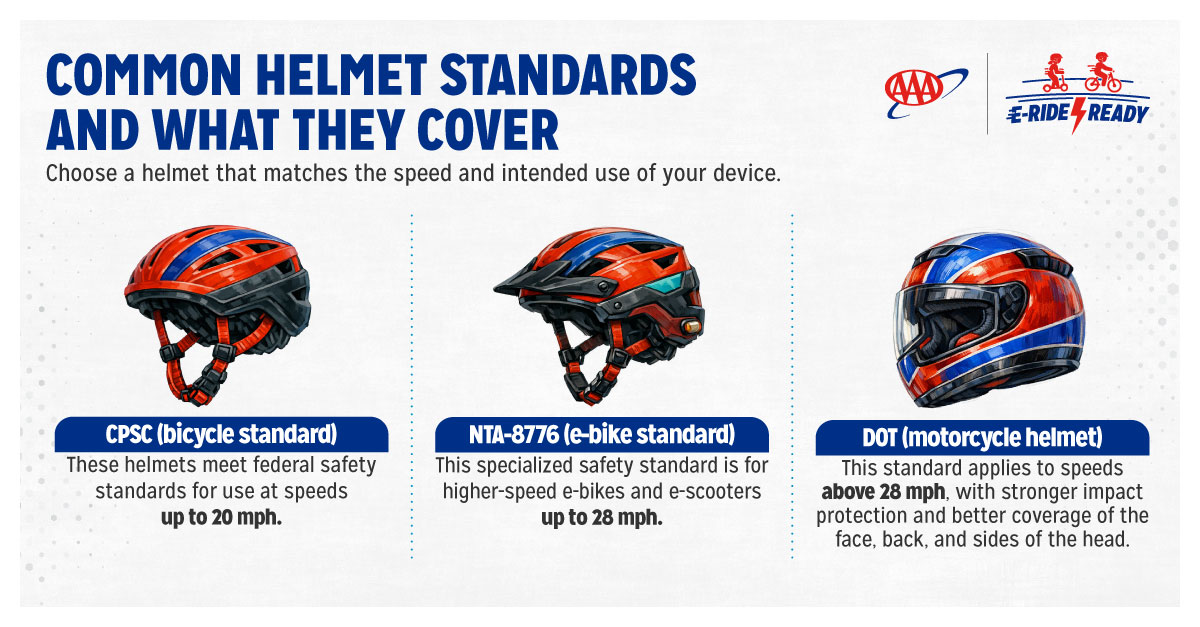
"One of the biggest misconceptions is that any helmet provides the same level of protection," Jenkins said. "The faster the device, the more important it becomes to choose a helmet designed for those speeds."
Do You Need a Helmet to Ride an E-Bike or E-Scooter in Florida?
Helmet requirements for e-bike and e-scooter riders differ significantly across the country. Some states require helmets for younger riders, while others have requirements based on rider age, device classification, or local ordinances.
Florida E-Bike and E-Scooter Laws
- Riders and passengers under 16 must wear a bicycle helmet that meets national safety standards
- Florida does not set a statewide minimum age for riding an e-bike, although local governments may adopt additional restrictions
- Cities and counties may adopt their own rules regarding where e-bikes and e-scooters may be operated, including sidewalks, shared-use paths, and beach areas. Riders should check local regulations before riding
Although Florida doesn’t require helmets for all ages, AAA recommends that all riders wear a properly fitted helmet and choose one that is certified for the speed and capabilities of the device being ridden.
What Should Parents Know About E-Bike Helmet Safety?
AAA recommends:
- Wear a helmet on every ride, regardless of distance
- Choose a helmet that is certified for the speed and capabilities of the device being ridden
- Make sure the helmet fits properly and remains securely fastened
- Replace any helmet involved in a crash
Families looking for additional information about helmet selection, rider readiness, state laws, and safe riding practices can download AAA's free E-Ride Safety Guide. The guide was developed with input from regional trauma centers and bicycle safety organizations.
About the AAA Consumer Pulse™ Survey
The AAA Consumer Pulse™ Survey was conducted online among 400 Florida residents from April 17 – 26, 2026. Survey results have a maximum margin of error of ± 4.9% points. Responses are weighted by age and gender to ensure a reliable and accurate representation of the adult population (18+) in Florida.
The Auto Club Group (ACG), named a 2026 Forbes Most Trusted Company in America, is the second-largest AAA club in North America, with more than 13 million members across 14 U.S. states and two U.S. territories. ACG and its affiliates provide members with roadside assistance, insurance products, financial services, travel offerings and more. ACG is part of the national AAA federation, which serves more than 66 million members across the United States and Canada. AAA’s mission is to protect and advance freedom of mobility and improve traffic safety. For more information, download the AAA Mobile app, visit AAA.com, and follow us on social media.